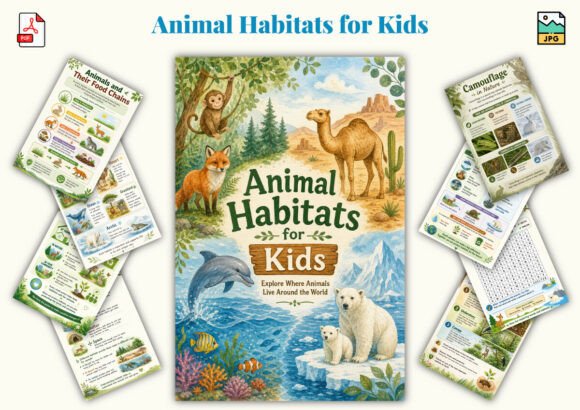
Animal Habitats for Kids: A Design Asset for Educational Engagement
When you're building a brand, product, or educational resource, the visual language you choose speaks volumes before a single word is read. The Animal Habitats for Kids workbook isn't just a collection of worksheets; it's a thoughtfully crafted design system. Its personality is one of friendly curiosity and structured discovery. The visual style balances clean, approachable layouts with vibrant, engaging illustrations. This creates an overall appeal that feels both trustworthy for parents and exciting for children. For a designer or publisher, it represents a complete package—a ready-made brand identity for any project centered on nature, science, or early childhood education.
Where This Educational Design Truly Shines
The strength of Animal Habitats for Kids lies in its focused versatility. Its core application is, naturally, in educational design and publishing. Think beyond a simple PDF download. This visual framework is perfect for developing a full line of homeschooling materials, a series of classroom posters, or even the foundational aesthetic for an educational YouTube channel or app. The consistent style across its 51 pages ensures brand consistency, making any derived project look polished and professional from the start.
For entrepreneurs and content creators in the parenting or education space, this workbook is a launchpad. The design assets—from the illustrated habitats to the activity layouts—can inspire a cohesive social media graphics strategy. Imagine using its visual motifs for Instagram carousels explaining rainforest layers or Pinterest pins featuring desert animal facts. Its modern typography and clear visual hierarchy make information digestible, which is critical for web design and digital content where attention spans are short.
Furthermore, its utility extends into physical products. A crafter or small business owner could leverage the themes and illustrations to design nature-themed party supplies, educational flashcards, or activity kits. The print-ready file format and standard size make transitioning from screen to physical product straightforward. The workbook’s style acts as a creative font in a broader sense—it sets a tone that is playful yet informative, a difficult balance to strike in children’s products.
Making It Work: Practical Implementation
Adopting a pre-designed system like this requires a strategic eye. First, evaluate the project fit. Does your brand or project align with themes of exploration, environmental science, or interactive learning? If so, the visual language of Animal Habitats for Kids can dramatically accelerate your development process, providing a professional foundation that might otherwise take weeks to build from scratch.
Next, consider font pairing and integration. While the workbook comes with its own typographic choices, you may need to incorporate it into a larger brand that has existing fonts. The key is to look at the personality of the typefaces used—are they sans-serif for clarity or a friendly script font for headings? Pair them with complementary fonts in your main brand kit. A clean, modern serif font could work beautifully for body text in a related parent guide, while the workbook’s display fonts could be reserved for titles and callouts to maintain that engaging, child-friendly brand identity.
Readability is paramount. The workbook’s design excels here, using ample white space, clear icons, and age-appropriate language. When extracting elements for your own use, prioritize this clarity. Test layouts at various scales—on a phone screen and on a printed poster—to ensure the visual hierarchy holds up. The interactive elements, like the puzzles and drawing exercises, are not just content; they are design patterns you can study to understand how to encourage user engagement and learning through interface design.
Finally, respect the licensing. As a commercial font and asset package, understanding its terms is non-negotiable for professional use. Review the included PDF file and JPG files to see exactly what you have to work with. The true value isn’t just in the 51 pages of content, but in the cohesive design thinking they represent. By treating Animal Habitats for Kids as a strategic design asset rather than a mere product, you can unlock its potential to build trust, educate effectively, and create memorable experiences in a crowded educational marketplace.