Forest Animal Drawing Prompts: A Creative Nature Study
There's a certain magic in the forest—the quiet rustle of leaves, the flash of a deer's tail, the distant call of an owl. Capturing that wonder on paper, however, can feel daunting for young learners and busy educators alike. This is precisely where a well-designed educational resource steps in, not just to teach, but to inspire. The Forest Animal Drawing Writing Prompts unit is crafted to bridge that gap, transforming a standard science lesson into an immersive, multi-sensory exploration of woodland life.
Beyond the Worksheet: A Multi-Modal Learning Experience
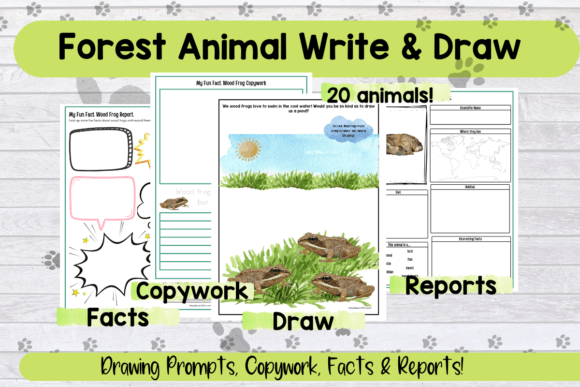
This isn't a simple set of coloring pages. Think of it as a curated toolkit for discovery. The core of the unit revolves around 20 distinct forest animals, each presented with a beautifully rendered drawing prompt. These aren't just outlines; they feature full-color watercolors and photographs that provide immediate visual reference and inspiration. For a child learning about the red fox, seeing its vibrant fur and bushy tail in a high-quality image makes the subject tangible and exciting.
The design philosophy here is about layered engagement. After the drawing activity, the unit offers structured pathways for deeper learning:
- Copywork Pages: These are foundational for younger students. Practicing penmanship and spelling with sentences about the animal they just drew reinforces vocabulary and fine motor skills in a meaningful context.
- Fun Fact Reports: Designed for beginner researchers, these guided pages teach the basics of information gathering. Kids fill in blanks about an animal's habitat, diet, and a unique trait, learning to identify and record key facts.
- Advanced Report Pages: For older or more advanced learners, these pages provide a framework for independent research and essay-style writing, building critical thinking and composition skills.
Practical Application in Creative and Educational Spaces
As a design asset, the true strength of this unit lies in its versatility and visual coherence. The consistent, nature-inspired aesthetic across all pages creates a professional and engaging feel, whether printed for a homeschool co-op or displayed on a classroom bulletin board. For bloggers and content creators in the education or parenting space, it represents ready-made, high-quality content that can be used in tutorials, lesson plans, or printable packs, saving hours of design time.
For small business owners and entrepreneurs running educational shops or tutoring services, incorporating such a polished unit into their offerings enhances their brand identity. It signals a commitment to quality, thoughtful curriculum design, and a modern approach to learning. The resource itself functions like a well-chosen creative font in a logo design—it sets the tone, communicates values, and creates a memorable experience for the end-user.
Integrating the Unit: A Guide for Educators and Parents
Successfully using a resource like this requires more than just printing and handing out. Here’s how to maximize its impact:
Evaluate the Flow: Start with the drawing prompt to spark curiosity and engagement. Follow with the copywork for kinesthetic and linguistic reinforcement. Then, introduce the research component, allowing students to transition from artistic expression to analytical thinking. This progression mirrors a natural learning cycle: observe, create, then investigate.
Consider Your Audience's Stage: The unit is intentionally designed for multi-age use. A first grader might focus solely on the drawing and simple copywork, while a fourth grader tackles the full report. In a homeschool setting with multiple children, everyone can study the same animal at their own level, fostering shared discussion and individual progress.
Extend the Learning: Use the prompts as a springboard. After completing a page on the wood frog, for example, take a nature walk to listen for amphibians. Pair the deer prompt with a viewing of a documentary clip. The high-quality visuals in the unit are not just for drawing; they are conversation starters that can lead to broader explorations of ecosystems, conservation, and animal behavior.
Ultimately, the Forest Animal Drawing Writing Prompts unit succeeds because it understands that effective education is holistic. It values the child who expresses understanding through art as much as the one who excels at written composition. By providing a beautiful, structured, and flexible framework, it empowers educators to deliver a rich, immersive nature study that resonates with every kind of learner, turning the mystery of the forest into a series of fascinating, hands-on discoveries.