Infuse Authenticity into Your Brand with Watercolor Clipart
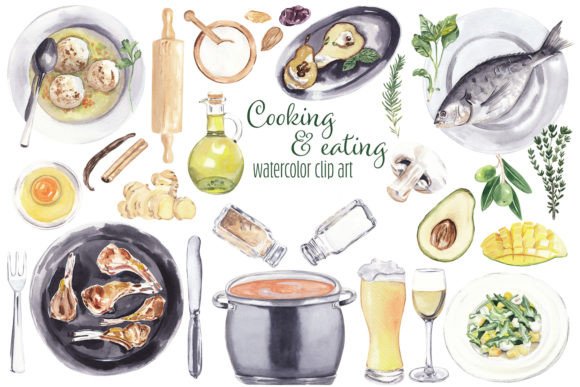
There is a distinct warmth that comes with hand-painted illustration, a tactile quality that digital vectors often struggle to replicate. In the current market, where consumers crave authenticity and "human" touches in their digital and physical products, the Cooking Watercolor Clipart Set Recipe offers a sophisticated solution. This collection is not merely a set of images; it is a toolkit for visual storytelling. Comprising 31 high-resolution PNG illustrations, this set captures the essence of the culinary world through a soft, artistic lens. From the vibrant zest of sliced mango and avocado to the rustic charm of a meatball soup or a glass of white wine, every element is rendered with the fluidity and pigment variation that only watercolor can provide.
For designers and entrepreneurs alike, the appeal lies in the versatility of the subject matter. The set covers a comprehensive range of ingredients and kitchenware—salt and pepper, rolling pins, vanilla, cinnamon, and various herbs like rosemary and thyme. This breadth allows for the creation of cohesive visual narratives without needing to source disparate elements. The transparent backgrounds and 600 DPI RGB format ensure that these assets are production-ready, bridging the gap between a spontaneous sketch and a polished commercial product. Whether you are building a brand identity for a farm-to-table restaurant or designing a digital planner for a health coach, this collection provides the foundational elements for a professional aesthetic.
Strategic Applications for Creative Professionals
Understanding where to deploy the Cooking Watercolor Clipart Set Recipe is key to maximizing its value. This is not just for scrapbooking; it is a strategic asset for serious design work.
Publishing and Editorial Design
For independent publishers and authors, this set is a game-changer for cookbook design. Instead of relying solely on photography, which can be expensive and inconsistent, watercolor illustrations offer a timeless, editorial look. They work beautifully as chapter dividers, spot illustrations in the margins, or full-page features. The illustration of a fish on a plate or a pear dessert can break up long blocks of text, improving the reader's experience and visual hierarchy. It allows for a cohesive layout that feels curated rather than assembled.
Branding and Packaging
In the realm of packaging design, texture sells. A jam jar label featuring the watercolor strawberry or a spice packet adorned with the ginger and nut illustrations instantly communicates artisanal quality. Small business owners in the food industry can use these graphics to build a consistent brand identity across their logo design variations, social media graphics, and physical packaging. The style suggests that the product inside is made with care and natural ingredients, influencing brand perception before the customer even tastes the product.
Digital Products and Web Design
For digital creators, the utility extends to web design and downloadable products. Bloggers can use these illustrations to create unique headers for recipes, breaking away from the standard stock photography that saturates the internet. Furthermore, this set is perfect for creating digital planners, recipe cards, and printable wall art. The high resolution ensures that even when cropped or zoomed, the integrity of the brushstrokes remains, maintaining a professional standard for your digital downloads.
Designing with Purpose: Pairing and Integration
While the clipart provides the visual flair, the typography you pair with it will determine the final voice of the project. Because the Cooking Watercolor Clipart Set Recipe has an organic, slightly irregular aesthetic, it pairs best with fonts that complement rather than compete.
Typography Pairings
Consider using a clean, modern sans serif font for body text to ensure readability against the detailed illustrations. A geometric sans serif provides a pleasing contrast to the fluid watercolor shapes. For headlines, you might explore a handwritten font or a relaxed script font to maintain that personal, kitchen-table feel. However, be cautious with overly ornate script fonts; you want the audience to be able to read the menu or recipe instructions quickly. The goal is a balance between the artistic personality of the illustrations and the functional legibility of the text.
Color Theory and Consistency
Since the clipart features natural pigments—greens of herbs, reds of tomatoes, browns of nuts—your background colors should be chosen carefully. A stark white background is classic, but a soft cream or kraft paper texture can enhance the vintage feel. When using these in a brand identity, pull specific color codes from the illustrations to use in your typography or background shapes. This creates a unified color palette that strengthens brand recognition and visual consistency.
Practical Considerations for Commercial Use
When integrating these assets into commercial work, it is vital to understand the licensing and technical specifications. The Cooking Watercolor Clipart Set Recipe comes with specific usage rights designed to protect the creator while empowering the user.
- Format and Quality: The 600 DPI resolution makes these files suitable for high-quality print production, including magazines, posters, and packaging. The RGB color mode is standard for digital use, but for professional offset printing, you may need to convert the color profile to CMYK and check for color shifts, as watercolor pigments can sometimes dull in conversion.
- Licensing: Please note the usage terms clearly: you cannot resell or redistribute the digital product itself. This means you cannot package these PNGs into a new clipart bundle to sell to other designers. However, you are free to use them in physical or digital products you sell (like a finished cookbook or a planner), provided the files are secured or flattened so the end-user cannot extract the raw assets.
- Layering and Effects: Because the files have transparent backgrounds, they are excellent for layering. You can overlay them on top of watercolor washes or textures to create depth. Experiment with transparency settings in your design software; fading an illustration slightly can turn it into a subtle background pattern that adds texture without overwhelming the main content.
Ultimately, the value of this collection lies in its ability to save time while elevating quality. Instead of spending hours trying to paint or digitally mimic these elements, you have a library of professional-grade illustrations ready to deploy. For the creative professional, this is about efficiency and standard—allowing you to focus on the layout, copy, and strategy while the visuals handle the emotional heavy lifting. Whether you are curating a special occasion menu or designing a logo for a new bakery, these watercolor elements provide the perfect blend of artistic charm and commercial utility.